Why Policy Makes the Difference

For many organisations, digital signatures are no longer new territory. Contracts, approvals and formal documents are increasingly signed electronically, driven by the need for efficiency, speed and reduced paper usage. In practice, however, digital signing is often introduced as a standalone functionality, without sufficient attention to the agreements and decisions that should underpin its use.
As a result, organisations do sign digitally, yet still feel uncertain when facing audits, legal questions or scaling challenges. Not because the technology falls short, but because there is no clear framework guiding its application. Policy is therefore not an administrative burden, but the foundation that makes digital signing legally defensible, manageable and future-proof.
This document explains why policy plays a crucial role in digital signing and which elements are essential to make it work in practice.

From ad hoc choices to well-founded decisions
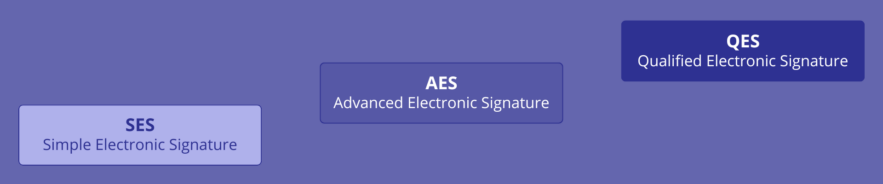
One of the first questions in digital signing is which type of signature is required for which document. In the absence of policy, these decisions are often made ad hoc. Teams decide independently, sometimes out of caution, sometimes out of convenience. In some organisations this results in the strongest signature level being used by default “just to be safe”. In other cases, lighter signatures are applied to documents with clear legal or financial impact.
Policy helps to structure these choices. It forces organisations to consider criteria such as risk, impact, regulation and the involvement of external parties. By defining in advance which range of signature levels is acceptable per document type, clarity emerges. Not every signature needs the highest possible legal weight, but every choice should be deliberate, repeatable and defensible. Policy replaces gut feeling with consistent decision-making.
Legal evidential value arises from the whole, not from the signature alone
A common misconception is that a digital signature in itself is sufficient to guarantee legal certainty. In reality, evidential value only arises when the signature is embedded in clear agreements about identity, intent and context. Without policy, these elements often remain implicit or unclear.
In practice, this results in documents that are technically signed correctly, but where it cannot be demonstrated unambiguously who signed, in which role or with which authority. The intent of the signature may also be unclear: was it an approval, a binding agreement or merely an acknowledgement? When such questions only arise during a dispute or audit, it becomes extremely difficult to answer them conclusively.
Sound policy therefore defines how signatories are identified, how intent is explicitly captured in the process, and which contextual information is recorded in the audit trail. It ensures that not only the signature itself, but the entire signing process stands up legally.

Scale requires structure
Digital signing rarely starts across the entire organisation. It usually begins with a single team or process. Without overarching policy, however, this practice quickly evolves into a patchwork of approaches. Local exceptions become the norm, international entities apply different rules, and governance is added only after the fact.
Policy enables digital signing to scale in a controlled way. It creates a shared framework within which teams can operate, allowing for local variation without losing coherence. This keeps digital signing manageable, even as the number of users, processes or countries increases.
Signing does not end with the final click
A digital signature is not an endpoint, but a step in the document lifecycle. Yet in many organisations, signing and archiving are treated as separate concerns. Signed documents end up in different systems, audit trails are not preserved sustainably, and retention periods are unclear or inconsistent.
Policy connects signing with archiving and retention. It determines where signed documents are stored, which metadata is preserved and how long evidential elements must remain available. This is essential to demonstrate, even years later, that a document is authentic and unchanged. Without these agreements, evidence often disappears precisely when it is needed most.
Clear ownership prevents standstill
Digital signing spans multiple domains: legal, IT, operations and compliance. Without explicit policy, it is often unclear who owns the overall process. Decisions are taken informally, exceptions accumulate, and incidents lead to debate rather than resolution.
Policy makes responsibilities explicit. It defines who decides on process changes, who is responsible for ongoing management and who may approve exceptions. This creates continuity and trust in the signing process, both internally and externally.

Conclusion
Digital signatures solve many problems, but only when they are part of a considered approach. Policy is not an additional layer, but the foundation that makes digital signing legally robust, scalable and future-proof.
By making clear choices from the outset, organisations avoid uncertainty later on and ensure that digital signing truly delivers on its promise.